Building Ontology Models Without Ever Saying “Ontology”
The hardest part of building an ontology has nothing to do with ontology.
On paper, an ontology model helps data make sense in the domain it describes. In practice, there’s only one way to know whether it works — build one and put it to use.
Building it was the part I was curious about. You need someone who knows the domain deeply. Then you need to turn what they know into entities, relationships and properties.
That second step is where things usually slow down. Experts are busy, and very few of them enjoy being asked to “define a class hierarchy” on a Tuesday afternoon.
So I wanted to check something specific. What if I talked to an expert about their work, asked only general questions, never mentioned ontology, and built the model from that conversation? Would it be good enough to use?
I interviewed three friends, each one of the best experts in their field:
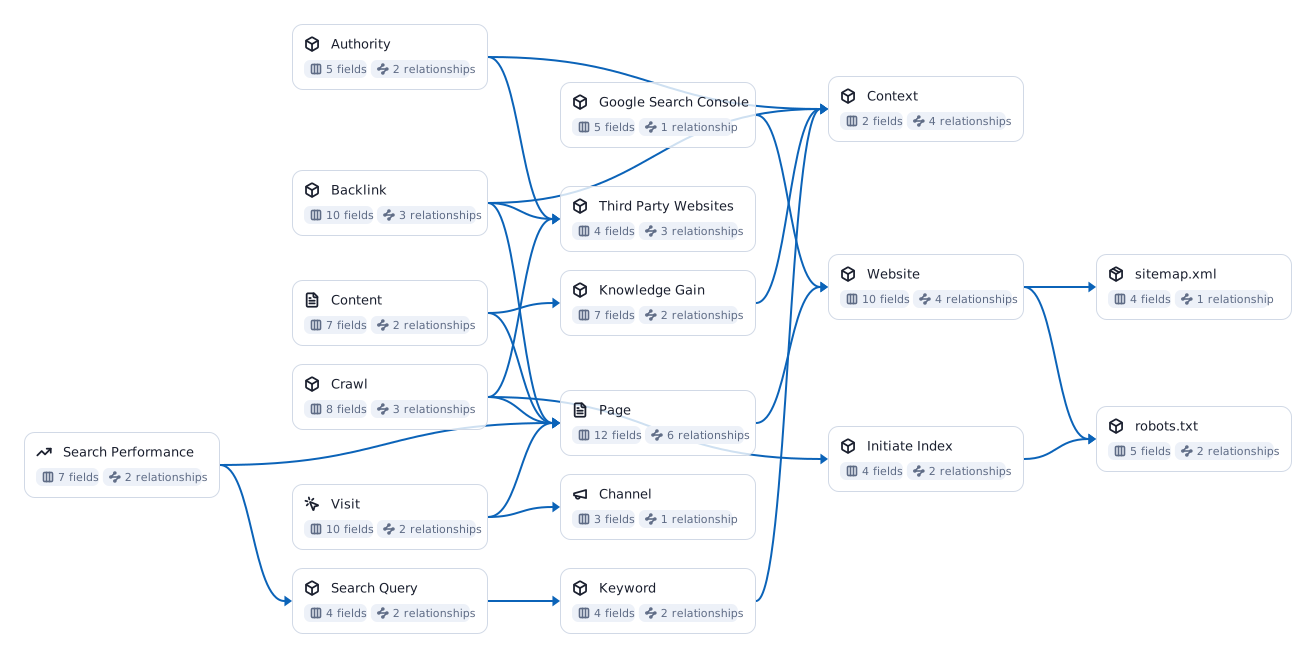
— Max Roslyakov Max RoslyakovFounder · FatGridFormer SVP Marketing at Semrush. Built FatGrid, a search engine and price comparison for guest posts across more than 300,000 publishers., search engine optimization1
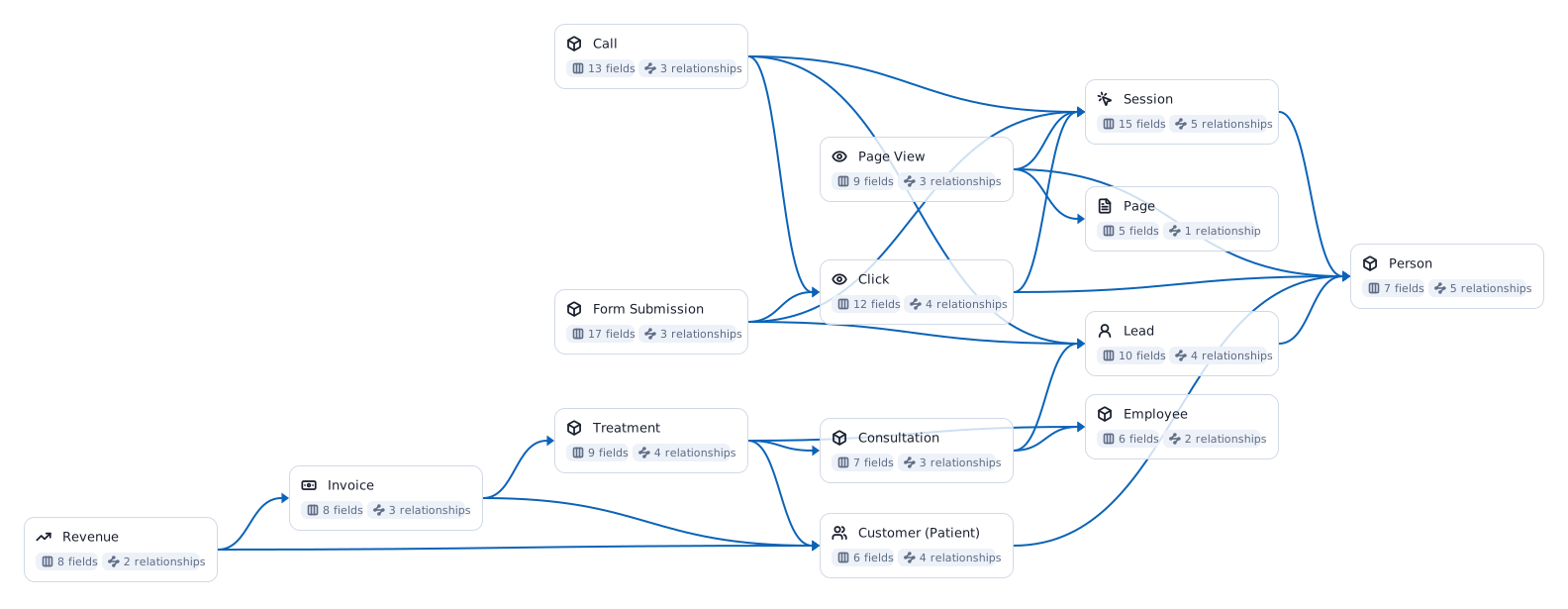
— Lesley van de Mortel Lesley van de MortelFounder · APAS® CloudPerformance marketer who built APAS® Cloud, a customer data platform that traces revenue back to the ad click, after the team managed more than $100M in ad spend., healthcare2
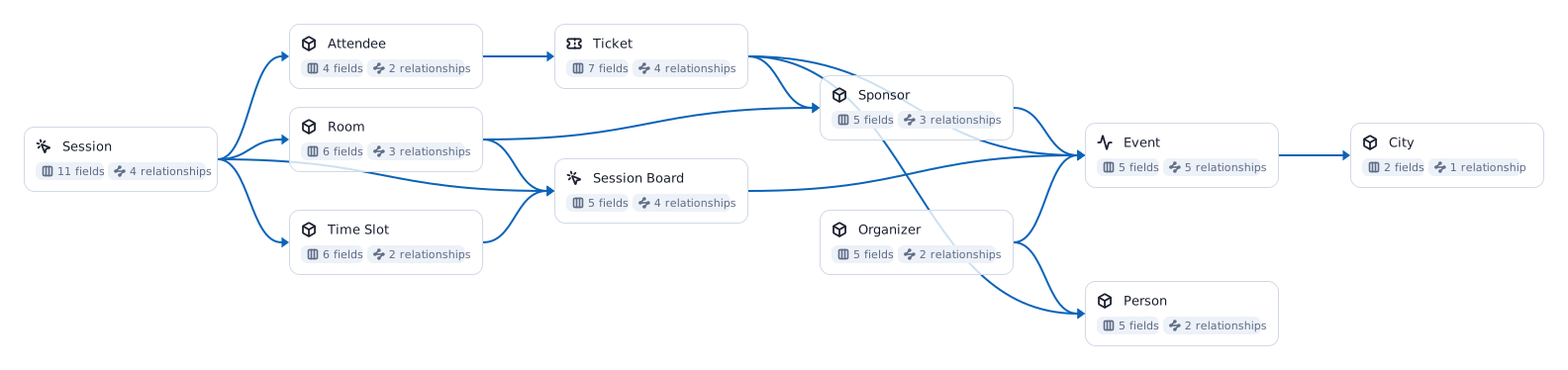
— Peter O’Neill Peter O'NeillFounder of MeasureCamp · ZHS OrchardsFounded MeasureCamp, the free analytics unconference, in 2012. It grew from 130 people in London to 27 cities in 2025. Co-founded LeapThree, an analytics consultancy Ayima acquired in 2018., data analytics conferences3
The questions were simple. What industry are you in? Which entities do you deal with? Which processes connect them? Not a word about ontology.
I transcribed the conversations and asked an LLM to turn each one into an ontology model in Open Knowledge Format4.
I expected a mess. Instead, I got a model of each industry with its entities, their properties and the relationships between them. All three made total sense and needed only a few adjustments.
Then I added data and started asking questions. The answers were meaningful — not hallucinated, but backed and guided by the models.
I believe the method deserves only part of the credit. The rest goes to the people I talked to.
PeterPeter O'NeillFounder of MeasureCamp · ZHS OrchardsFounded MeasureCamp, the free analytics unconference, in 2012. It grew from 130 people in London to 27 cities in 2025. Co-founded LeapThree, an analytics consultancy Ayima acquired in 2018., MaxMax RoslyakovFounder · FatGridFormer SVP Marketing at Semrush. Built FatGrid, a search engine and price comparison for guest posts across more than 300,000 publishers., LesleyLesley van de MortelFounder · APAS® CloudPerformance marketer who built APAS® Cloud, a customer data platform that traces revenue back to the ad click, after the team managed more than $100M in ad spend. and didn’t just describe their industries. They explained how those industries actually work, including the details only someone deep inside would know. That depth ended up in the transcripts, and then in the models.
Have the same conversation with someone who knows the industry only from the outside, and you’d barely get anything usable. An LLM is great at structuring knowledge. It can’t invent the expertise that was never in the room.
LesleyLesley van de MortelFounder · APAS® CloudPerformance marketer who built APAS® Cloud, a customer data platform that traces revenue back to the ad click, after the team managed more than $100M in ad spend., PeterPeter O'NeillFounder of MeasureCamp · ZHS OrchardsFounded MeasureCamp, the free analytics unconference, in 2012. It grew from 130 people in London to 27 cities in 2025. Co-founded LeapThree, an analytics consultancy Ayima acquired in 2018., MaxMax RoslyakovFounder · FatGridFormer SVP Marketing at Semrush. Built FatGrid, a search engine and price comparison for guest posts across more than 300,000 publishers. — thank you for your time and for patiently answering questions that sounded much simpler than what I was really up to.
If you want to try this, start with the expert closest to you — most likely your manager or your boss. Ask them about the business the way I did, without mentioning ontology, and see what comes out. I was surprised by how beautiful these models turned out, and I believe yours can look just as good.
All three models are below. Feel free to check them out 👇